
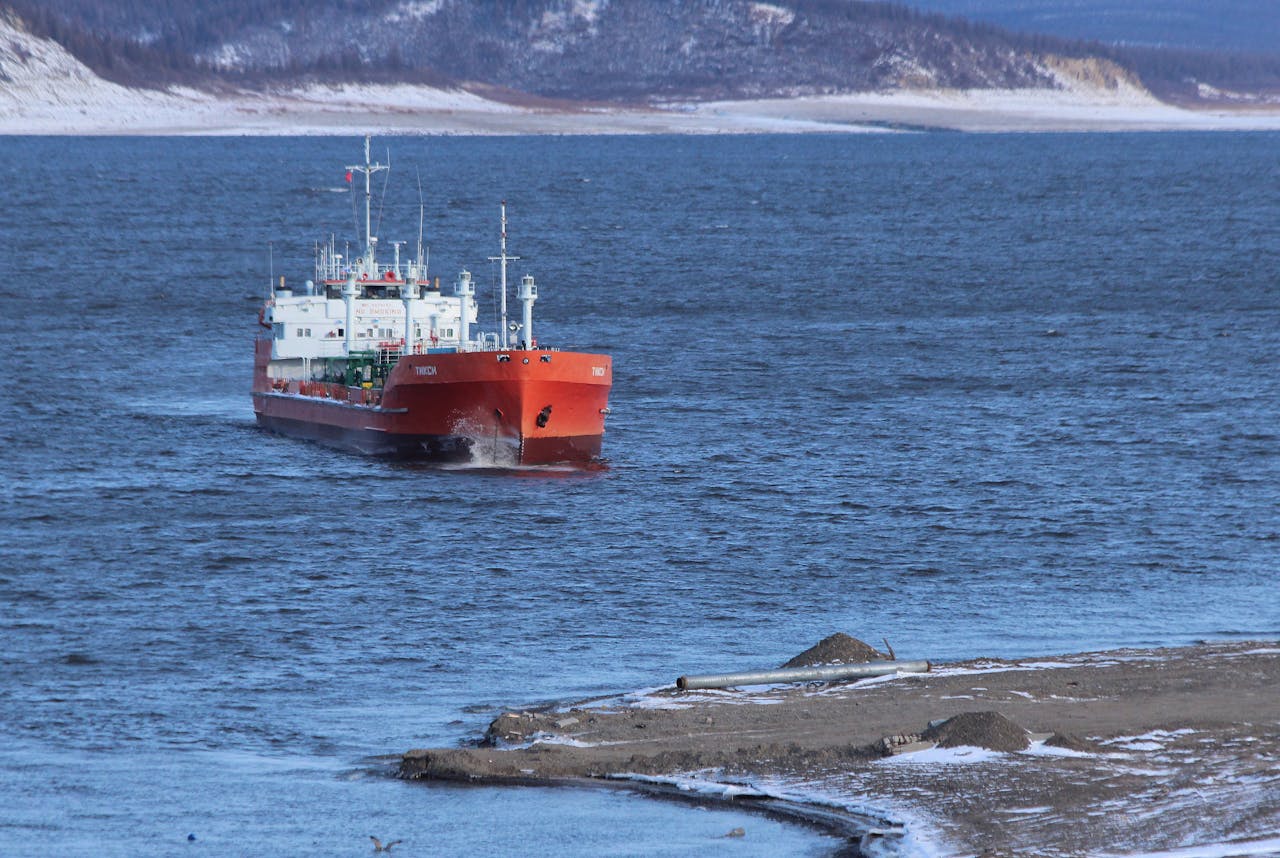
The Strait of Hormuz crisis has produced the largest oil supply disruption in the history of the modern petroleum market. Pre-conflict, the strait carried over 20 million barrels per day. As of early April 2026, that figure sits at roughly 3.8 million barrels per day. That's an 80% reduction in throughput from the world's most critical energy chokepoint.
But the headline numbers only tell part of the story. What makes this crisis different from every prior oil shock is the growing disconnect between two versions of the oil market. Brent crude futures, the "paper" price you see on CNBC, recently traded near $100 per barrel. Physical Dated Brent, the price for actual oil delivered within 10 to 30 days, has traded as high as $148.87 per barrel for specific North Sea grades. That's a $50 spread. In normal markets, the gap is $1 to $5.
Nothing in modern commodity history comes close.
Meanwhile, the CFTC has launched a formal investigation into over $2.2 billion in suspiciously timed oil futures trades placed in narrow windows before major policy announcements. The political response has been bipartisan. The trades are large enough that, if they unwind against the holders, the forced buying could trigger violent price convergence between paper and physical markets.
This analysis examines the supply data, the paper-physical divergence, the suspicious trading activity, the downstream effects, and what the historical precedents suggest about where this goes next.
The Numbers: A Supply Shock Without Precedent
80%
Reduction in Hormuz throughput
$148.87
Physical Dated Brent peak (April 7)
$2.2B
Suspicious trades under CFTC probe
The global oil market runs on a narrow margin of 1 to 2 million barrels per day of spare capacity under normal conditions. The IEA's April 2026 Oil Market Report put global supply at 97 million barrels per day in March, down 10.1 million barrels per day from prior levels. That is the largest single supply disruption the IEA has ever recorded.
JP Morgan published a timeline tracking the last tanker to clear Hormuz before closure on February 28. That vessel was expected to reach its final destination around April 20. After that date, pre-closure barrels are fully exhausted from the global supply chain. Asia's deliveries effectively stopped around April 1. Europe's around April 10. North America's last crude cargo reached Texas on April 1 and California on April 8.
The US Strategic Petroleum Reserve held approximately 415 million barrels as of March 2026. The administration authorized release of 172 million barrels. The IEA coordinated a collective release of 400 million barrels across member nations. These are meaningful numbers but insufficient against a sustained loss of 8 to 13 million barrels per day. At that rate, the entire SPR release covers roughly two to three weeks.
Global spare production capacity from all sources combined sits at approximately 2.8 million barrels per day. It cannot replace even a third of the missing Hormuz flows.
Paper vs. Physical: The $50 Spread Nobody is Talking About
To understand what's happening, you need to understand two prices that most people assume are the same thing.
Brent crude futures trade on the Intercontinental Exchange. They're financial contracts. They settle in cash. When CNBC shows you "oil at $100," that's the futures price. It reflects expectations about future supply and demand, weighted by speculative positioning and algorithmic trading. It's a useful number. It's not the price anyone actually pays for a barrel of oil.
Dated Brent is different. It's Platts' daily assessment of the price for physical North Sea crude cargoes loading 10 to 30 days forward. When a refinery in South Korea or a trading house in Geneva actually buys oil, the transaction references Dated Brent. This is the price that determines what you pay at the pump, what airlines pay for jet fuel, what chemical plants pay for feedstock.
In normal markets, the spread between futures and physical is $1 to $3. Maybe $5 during a disruption. In April 2026, it blew out to $35 to $50. JP Morgan published a chart showing the futures-physical spread going back to 2008. Nothing comes close. Not the 2008 financial crisis. Not Libya in 2011. Not the Russia-Ukraine shock in 2022.
Why the divergence? Physical buyers, the refineries who need actual barrels, are paying whatever it takes. If your refinery runs dry, you shut down. Paper traders are pricing in ceasefire probability, OPEC responses, and SPR releases. The paper market is trading the expected resolution. The physical market is trading the current reality.
Robert Rennie, head of commodity and carbon research at Westpac, put it directly: "As long as Hormuz flows remain restricted, the physical market, not paper indices, will determine prices."
The last time paper and physical diverged this far was April 2020, when WTI futures briefly went negative. But that was demand collapse. This is the mirror image: supply emergency with no oil to deliver. The dynamics are reversed. The lesson is the same. When paper and physical diverge this far, convergence is violent. And convergence comes on physical's terms.
$2.2 Billion in Suspicious Trades
On April 7, hours before a ceasefire announcement via Truth Social, someone placed approximately $950 million in short positions on oil futures. When the announcement hit, oil dropped 15%. The trade was worth a fortune.
It wasn't the first time. On March 23, billions of dollars in oil and stock futures traded in the 15 minutes before a policy announcement about Iran strikes. A separate $760 million short position was placed roughly 20 minutes before an announcement about the Strait "opening." Combined, the suspicious trades total over $2.2 billion, all placed in narrow windows immediately preceding market-moving policy shifts.
Bloomberg reported on April 15 that the CFTC launched a formal investigation, probing activity on both CME Group and Intercontinental Exchange platforms. Rep. Ritchie Torres (D-NY) called it potentially "one of the largest instances of insider trading." The response has been bipartisan.
For capital allocators, the trading investigation matters beyond the legal questions. Those short positions are still in the market. If the holders can't deliver physical oil when contracts expire, they face forced buying at physical prices of $130 to $150. That kind of short squeeze, at that scale, creates exactly the violent convergence between paper and physical that markets aren't pricing in.
The Domino Chain: Who Gets Hit First
Asia (April 1)
The region sources 60% of its oil from the Middle East. The Philippines declared a national energy emergency after fuel reserves fell from 55 to 34 days' supply in under a month. Indonesia and Vietnam issued work-from-home orders. Japan slowed bus and ferry services to ration diesel.
India (March 5 onwards)
The Ministry of Petroleum invoked the Essential Commodities Act, ordering refineries to halt commercial LPG. 90% of Indian restaurants run on LPG cylinders. Within a week, 20% of Mumbai's hotels and restaurants shut down. Industry losses estimated at 79,000 crore rupees per month.
Africa & Europe (April 10)
Reports from Ethiopia, Zimbabwe, and South Sudan indicated fuel dilution to stretch supply. The UK sold 10-year gilts at 4.92%, the highest since 2008. Australia, despite geographic proximity to alternatives, saw hundreds of service stations run dry.
United States (end of the line)
Last pre-closure crude reached Texas on April 1, California on April 8. The SPR release buys time, but at a burn rate exceeding 8 million barrels per day of missing supply, the buffer is measured in weeks, not months.
The 1973 Parallel
Three oil shocks provide the relevant comparison set.
1973 Arab Oil Embargo. OPEC removed roughly 4.5 million barrels per day, about 7% of global supply. Oil surged 300%. The S&P 500 fell over 48%. US inflation hit 12.3%. It took equities over seven years to recover. And here's the detail that matters most: as the embargo's end was negotiated in early 1974, the Dow rallied to 900. Investors assumed the worst was over. The market then fell another 40% as the full consequences worked through the system. Ceasefire did not mean recovery.
1990 Gulf War. About 7% of supply offline. Oil doubled. S&P fell approximately 20%. Recession was mild and brief. This is the scenario optimists point to today. It lasted two months.
2026 Hormuz Crisis. Approximately 15 to 20% of global supply is offline or severely constrained. Disruption has lasted over seven weeks with no resolution. Even using the 1990 playbook, a 20% correction and 8-month recession would be the expected outcome. But the scale is two to three times larger than 1990.
Consumer sentiment, measured by the University of Michigan survey, fell to 47.6 in early April 2026. That's the lowest reading in the index's 74-year history. Below 2008. Below COVID. The S&P 500 remains near its highs. That gap between consumer sentiment and equity prices has never resolved in Wall Street's favor.
Fertilizer, Food, and the Inflation Pipeline
Energy shocks don't stay in the energy sector. They travel through the fertilizer supply chain and arrive at the grocery store six to twelve months later.
Urea rose from $480 per ton in late February to $720 per ton by mid-March. That's 50% in three weeks. A third of global seaborne fertilizer trade passes through Hormuz. QatarEnergy halted downstream urea production after stopping LNG. Qatar's QAFCO complex alone accounts for 14% of global urea trade. China restricted fertilizer exports in response.
The timeline maps to: fertilizer costs locked in now (Q2 2026), crop production costs elevated at harvest (Q3-Q4 2026), consumer food price inflation arriving late 2026 through H1 2027. The crops most affected are maize, wheat, and rice. Even if the Strait reopened tomorrow, the fertilizer that wasn't shipped in March and April won't make the spring planting window in the Northern Hemisphere.
This isn't a supply chain inconvenience. It's an inflation pipeline that has already been filled.
The Bond Market Signal
The US 10-year Treasury sits around 4.3%. The UK 10-year gilt hit 4.92% at auction on April 14. Both rising since the war started.
Now look at China. Its 10-year sovereign yield has gone down, settling around 1.78%. For the first time in over 20 years, China has a lower 10-year sovereign yield than the US, UK, Japan, and Germany. Capital is flowing toward China as a relative safe haven. That's the opposite of what the strategic architects of this conflict intended.
The mechanism is self-reinforcing. An oil shock generates inflation. Inflation prevents rate cuts. Higher rates increase debt servicing costs. The US is running deficits above $1.8 trillion annually. At 4.6 to 4.8%, debt service enters what bond strategists call the "danger zone," where servicing costs accelerate deficit growth, pushing yields higher still.
Consumer expectations for inflation over the next year surged to 4.8% in the Michigan survey. If those expectations become embedded, the Fed's task becomes exponentially harder.
What This Means for Capital Allocators
The central tension is straightforward. Paper markets point toward resolution. Physical markets, shipping data, emergency declarations, fertilizer prices, and bond yields point toward a supply shock that is deepening and generating second-order effects that will persist regardless of when the Strait reopens.
History says physical reality wins. The 1973 precedent is instructive. Markets rallied on ceasefire hopes, then fell another 40% as the economic consequences arrived.
Gold at $4,850 per ounce is not an anomaly. Hard assets outperform during inflationary supply shocks. That pattern held in 1973, 1979, and now. Duration risk, meaning exposure to long-dated bonds and growth equities whose value depends on low discount rates, is the most dangerous position in this environment.
Jurisdictional diversification has taken on an urgency beyond tax efficiency. What this crisis has exposed is that energy supply chain access, banking system resilience, and physical infrastructure matter at a level that most allocation frameworks ignore. The countries with the strongest energy positions, including the UAE with pipeline capacity bypassing Hormuz entirely, are the same ones offering sophisticated structuring environments for international capital.
Position Your Capital for What Comes Next
Velora Partners helps accredited investors access tokenized Gulf real estate, jurisdictional diversification, and multi-currency banking infrastructure.
Book a Strategy CallRelated Reading
Important: This analysis reflects data and conditions as of its publication date (April 2026). The situations described are evolving rapidly. Facts, prices, and policy positions may have changed materially since publication. Verify current conditions before acting on any information in this article.
This report is published by Velora Partners for educational and informational purposes only. It does not constitute investment advice, a solicitation, or a recommendation to buy or sell any security, commodity, or financial instrument. All analysis is based on publicly available data from the IEA, EIA, DOE, JP Morgan, Bloomberg, the CFTC, S&P Global Platts, University of Michigan, and cited news sources. Past performance is not indicative of future results. Accredited investors and qualified purchasers should consult their own legal, tax, and financial advisors before making any investment decisions. Velora Partners and its affiliates may hold positions in asset classes discussed in this report.
Sources: IEA Oil Market Report (April 2026), EIA Press Release (April 7, 2026), U.S. DOE Strategic Petroleum Reserve data, JP Morgan Commodities Research, Bloomberg (April 15, 2026), CFTC investigation filings, S&P Global Platts Dated Brent assessments, University of Michigan Consumer Sentiment Index (April 2026), CNBC, Reuters, Westpac Commodities Research.